Saturday, August 21, 2021

No inbound travel to Bohol until Aug 31

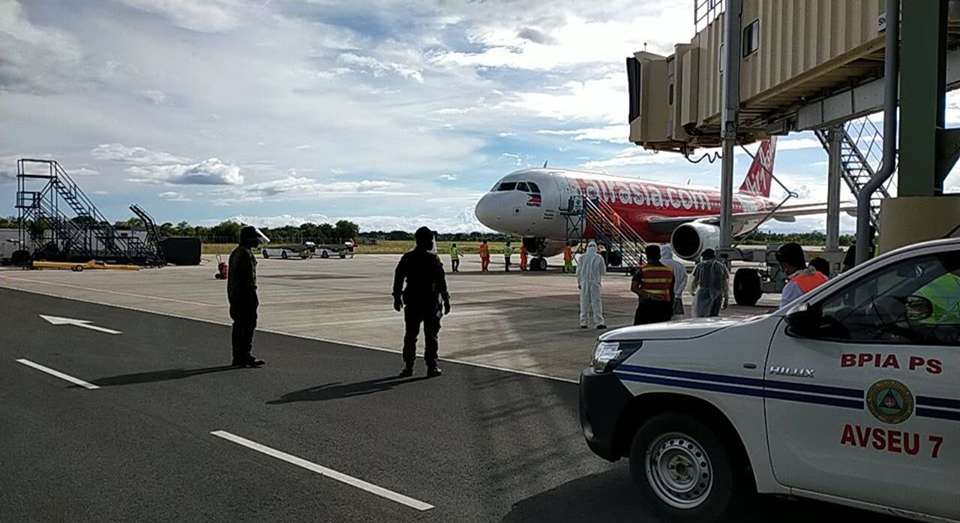
CORTES, Bohol, Aug. 18 (PIA) -- The two-week suspension of air and sea travel to Bohol continues as Gov. Arthur Yap, through an Executive Order, extended the inbound travel ban to the island for another 11 days.

Through Executive Order No. 40 series of 2021, the governor extended the ban on non-essential travel to Bohol from Aug. 6 to 20, until Aug. 31, effective as soon as the efficacy of the earlier Executive Order 37, series of 2021 lapses on Aug. 20.

The governor, in the new order, said the reason for the extension is due to the continuing surge of COVID-19 cases in the country brought about by the new variants of concern.

The governor cited the Delta variant among other variants of concern and of interest.

The decision came about during the Bohol Inter-Agency task Force on the Management of Emerging Infectious Diseases meeting with Bohol mayors, Inter-Agency Task Force medical task group, officers of the Provincial Tourism Council, and the Bohol Association of Hotels, Resorts and Restaurants on Aug. 16.

The said groups recommended the extension of the suspension of travel by non-Authorized Persons Outside Residence (APORs) across Bohol borders through air and sea.

The extension would be until Aug. 31, 2021.

The travel ban excludes health workers on official business, authorized government officials, and those traveling for humanitarian reasons, returning Overseas Filipino Workers, persons providing basic services and public utilities and bank personnel and other bank employees who shall enter Bohol to replenish cash funds and other supplies which are essential to the flow of local banking and financial services.

Outside travel from Bohol, however, remains open, but these are subject to the entry protocols imposed in the place of destination.

The order also extends the applicability and effectivity of the sections of the earlier executive order especially on the testing and quarantine protocols for entering APORs and strict border control protocols at all ports and airports of entry, as well as the penal provisions set by applicable laws and local ordinances. (RAHC/PIA7 Bohol)
Bohol has been cautious about those who come in to the island, even if these are APORs, in view of the continued threat of the COVID-19 along with the dreaded variant Delta. (PIA Bohol)
Food sent via courier alarm ASF officials in Bohol

TAGBILARAN CITY, Bohol, Aug. 10 (PIA) -- Just like the smuggling of shabu, Bohol could be in a great risk of the dreaded African Swine Fever (ASF) because of commercial couriers.

A Facebook post by an unnamed Boholano has exposed the alarm to local authorities and the local ASF Task Force about the possible breach this week.

In the Facebook post, authorities presumed that a Boholano attended a fiesta celebration in a neighboring province.

A fiesta goer who arrived in Bohol last week was cleared of the illegal meat: raw or processed as per port of entry measure, and by COVID-19 protocol has to undergo quarantine after coming back.

The relatives sent food or "bring house," a revered Boholano fiesta tradition, through a popular courier.

When the fiesta goer was on quarantine, family members in Bohol innocently posted on Facebook the following: "Ang namista, gi-quarantine pa. Ang bring house niabot na (The 'bring house' arrived ahead of the fiestagoer who is still on quarantine)."

Bohol has passed an ordinance in 2019 banning the entry of pork in whatever form: raw or processed, pork-related processed products, and even feeds sourced out from areas where ASF outbreak is noted.

ASF is a virus-caused hog disease that started in Africa and spread throughout the world decimating hog populations, causing Philippine authorities to put up strict biosecurity measures.

In the Philippines, the Department of Agriculture declared ASF outbreaks in most areas in Luzon, especially around Metro Manila extending to Southern Luzon, several provinces in Mindanao, and in nearby Leyte.

The said Facebook post, which came from an account registered in eastern Bohol, led authorities to believe that the smuggled meat which arrived by courier could come from Leyte.

Just like shabu, authorities later found out that while strictly implementing guard protocols at the airport and ports of entry, shabu came to Bohol allegedly by courier.

As to ASF, the virus can be spread through human contact, can be carried by vehicles from ASF contaminated areas, and the virus can survive even when cooked or processed.

Since last year, Bohol ASF Task Force members have ensured that vehicles crossing to Bohol from neighboring provinces are disinfected fully and washed thoroughly to rid of the chances of accidentally bringing the virus and contaminating Bohol.

Bohol keeps a multi-billion hog industry, about 90% of these come from backyard hog growers who would be severely affected by the disease should it infect their farms.

In view of this, Provincial Veterinarian Dr. Stella Marie Lapiz met with local couriers to discuss measures on how they can help keep Bohol ASF-free and for the couriers to be safe from the penalties put up by the ordinance. (RAHC/PIA7 Bohol)
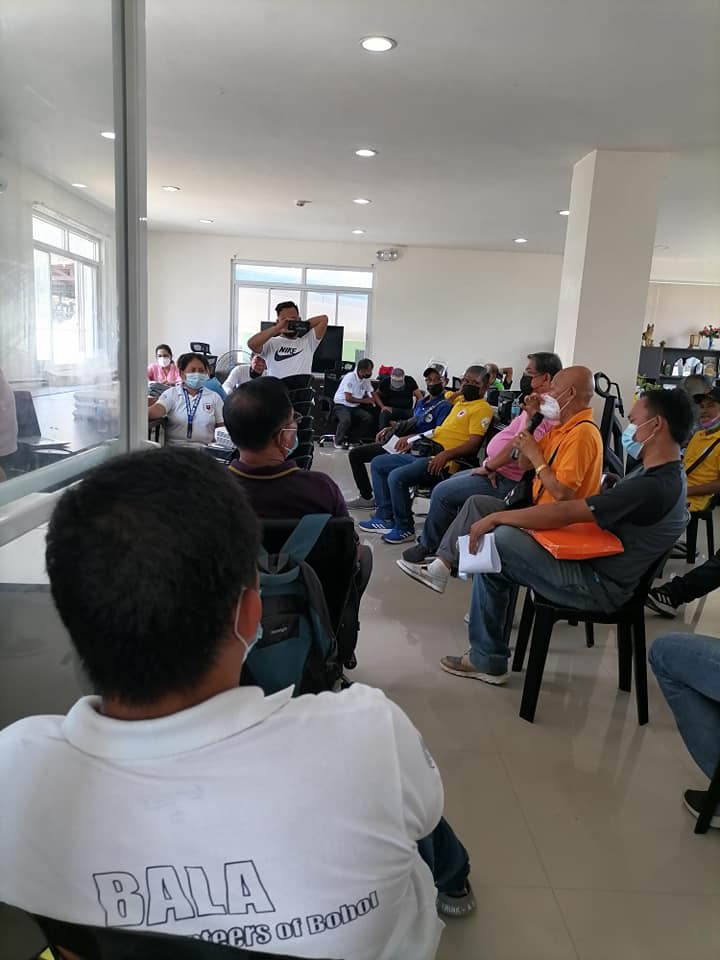
The Bohol Association of Livestock Aides have been at the forefront of anti-ASF measures and have successfully kept Bohol ASF-free to save the multi-billion peso hog industry here. (RAHC/PIA7 Bohol)
MSME FEATURE:
Smoking hot: Tubigon’s XO
smoked bangus in markets

Extra ordinary measures can come in extra ordinary times.

This sums up much of the still-infant yet already smoking-hot story of a soft boned smoked milkfish (bangus) processing in Guiwanon Tubigon, Bohol.

“It was during the lockdowns that we decided to try smoked fish, to supply for the consumption of an in-law who loves smoke processed food,” shares Loreliza Mula Saul, 45 years old married with two kids and manager of the XO soft-boned smoked milkfish (bangus).

My sister Emilia and her husband, a Briton, have cravings for smoked food, and when the supplies run out in the malls and supermarkets following the lockdowns, were left with nothing to buy, she narrated, occasionally adjusting the plastic gloves she wore while arranging the butterfly-cut bangus from the pressure cooker, in the house extension which also acts as the smoke-house and fish processing.

They bought the equipment while the family also set up, designed and put up the processing plant in Panaytayon, within their family compound.

“I was trained on the technology and attained the necessary skills to run and operate the plant, with a handful of workers. It was at the peak of the lockdowns and we hired some people to get them some work to bring food to their tables too,” Loreliza or Lailai as she is fondly called added.

“What started as a modest venture into sardines and shads (galunggung) turned out to be unsustainable because the market price for the fish fluctuates with the seasons. We simply can’t sustain with the operations without the supply,” she said while laying the pressure cooked fish in a stainless grill for the smoke chamber.

Besides, these fish have bones that are hard to soften.

To get a sustainable supply of fish, they figured out it has to be milkfish as they can be year-round, pressure cooked so that the bones become soft and edible.

That time too, when the lockdowns loosened, Emilia and her husband decided to fly back to England, that a decision to sell the equipment was in the offing.

I was looking at workers who would be out of jobs, and the orders that had started to come, so I asked my sister and her husband if we could continue with the operations instead, she shared.

The couple agreed and so, the business continued, this time in a new location: in her house extension along the national highway in Barangay Guiwanon, Tubigon.

“Due to space limitations and because we are only about two months old, we decided to just keep the staff to the minimum, while we develop the market,” Lailai, in white apron, hair net and black pants with rubber boots respond as she moves in and out of the stainless working table in her small kitchen plant.

As the fish are delivered, they are washed, butterfly cut, dipped in brine solution, pressure cooked and the fed to the smoke chambers.

The chamber is fed with smoke from burnt mango leaves, which leaves a hint of homey smokey smell in the fish, after getting exposed in the chamber for some time.

The smoked fish from the chamber are immediately vacuum-packed in 300 grams, the number of pieces depends on the sizes.

These are then placed in freezers to keep them fresh during delivery.

When stored right the smoked bangus can last for three months and when refrigerated, these can last for 18 months, she said, as she places six sized small bangus inside a cellophane pack for vacuum packing later.

“We are now processing small sizes, as we negotiate fish cage owners to sell to us their harvest,” she said adding that the system works as cage owners are freed from the hassles of shipping the harvest to the province’s markets and wait for the sales.

Although still alien to Boholano tastes, smoked fish is a favorite breakfast fare among Tagalogs. However, the initial prospects in Bohol markets prove to be bright.

“We started putting our XO Smoked Bangus by concession in Bohol market and it appears to be good. We are also sending out deliveries to nearby islands and even in Manila where we have resellers helping us,” Lailai said, singlehandedly carrying the marketing and plant operations, her husband who is a seafarer, still out to provide for their kids.

XO smoked bangus is packed as a ready to eat fare, although they recommend to steam it or like Filipinos would do, fry it to heat it.

But is its ready to eat from the pack, she stressed.

Already out in the market but still considerably a micro-business, Saul hopes she could tap government help to expand.

Thinking of expansion in the midst of a pandemic, XO should be extraordinarily looking at taking in more, taking care of its workers and filling everyone’s pantry while the lockdown has kept the competition at bay. (rahc/PIA-7/Bohol)
SMOKING HOT. Loreto Mula Saul (center) assumes the responsibility in operating the family’s smoked fish processing seeing this can also help people gain employment, get food supplies in time of the pandemic and help fish cage investors in disposing of their harvest. (rahc/PIA-7/Bohol)
SOFT-BONED SMOKED BANGUS. With bangus readily available year round, XO smoked the fish and introduced to the Boholano taste the Tagalog favorite smoked-fish for breakfast. (rahc/PIA-7/Bohol)
PREPPING FOR THE SMOKEHOUSE. An XO worker readies the butterfly cut, brine soaked and pressure cooked bangus for the next process: smoking to put in the mango smoke taste in the processed food. (rahc/PIA-7/Bohol)
P180 FOR 300 GRAMS. The ready to eat XO Smoked bangus comes in packs of 300 grams sold at P180. (rahc/PIA-7/Bohol)
RNET cites Bohol PNC as CVs
overall Best Performing LNC

CORTES, Bohol, Aug 18 (PIA) – Central Visayas (CV) Regional Nutrition Evaluation Team (RNET) picks Bohol Provincial Nutrition Committee (PNC) as this year’s Overall Best Performing Local Nutrition Committee (LNC), an honor marked by drastically reducing malnutrition in implementing programs and policies that address the province’s underweight, stunted and severely wasted children.

In the 2021 Monitoring and Evaluation of the Local Level Plan Implementation (MELLPI) and the subsequent deliberations of the RNET, Bohol stood above the rest, outshining other local governments in the implementation of Vision and Mission, Governance and Organizational Structure and Local Nutrition Committee Management based on the MELLPI Pro tool.

As such, Bohol PNC was be recognized as one of the Best Performing Local Nutrition Committee for 2021.

Also getting their honors were Municipality of Balilihan, Municipality of Sierra Bullones and Municipality of Bien Unido for the best performing LNC in the municipality levels, according to the Provincial Nutrition Coordinator Glenda Grafilo, at the recent Kapihan sa PIA.

The local nutrition cluster of Ubay town also won this year’s outstanding Local Nutrition Cluster in the Visayas for 2021.

Based on the results of the 2021 Monitoring and Evaluation of the Local Level Plan Implementation and the subsequent deliberations of the RNET with consideration of the results of the online nutrition

service continuity survey in LGUs conducted in the first quarter of this year, Ubay soared above the rest and outshone other local governments, showing strength and resilience by placing nutrition at the centerpiece of their COVID-19 response.

Moreover, Talibon Mayor Janette A. Garcia received a Certificate of Recognition as Nutrition Champion in the past year’s nutrition program for the town while Joanna Faye Obdulia B. Reserva, the Municipal Nutrition Action Officer (MNAO) of Tubigon, Bohol was cited as Outstanding Regional Local Nutrition Action Officer of the Year.

This year’s LNC evaluation looked into the vision and mission of the LNC as Dimension 1, the local Nutrition Laws and Policies for dimension 2, Governance and Organizational Structure for dimension 3 and Local Nutrition Committee Management as dimension 4 based on the monitoring and evaluation of local level plans implementation protocols (MELLPI Pro).

The MELLPI Pro replaces the old MELLPI tool which assessed the local nutrition program using efficiency and effectiveness criteria while the new tool emphasizes on the assessment of LGUs' progress toward compliance to quality standards; evidence-based validation; and mentoring through joint discussion for learning and actions with the LGU and nutrition workers assessed.

Using the same parameters for barangay LNCs, the regional evaluation committee picked Barangay Boctol, Balilihan for outstanding performance in vision and mission, their local Nutrition Laws and Policies, Governance and Organizational Structure and Local Nutrition Committee Management, while Barangay Datag Norte, Balilihan also was cited by the RNET for its outstanding governance and organizational structure.

RNET also picked as Best Performing LNC Barangay Level, barangay Salvador, Sierra Bullones for its local nutrition laws and policies, governance and organizational structure as well as nutrition committee management.

Barangay Lataban of Sierra Bullones was also cited Best Performing LNC Barangay Level for Governance and Organizational Structure, while Barangay Liberty of Bien Unido is Best Performing LNC Barangay Level for the same Governance and Organizational Structure.

Also winning the same recognition are Tagbilaran City’s Manga LNC for Governance and Organizational Structure and its Changes in Nutrition Status; and Cabawan LNCs for Governance and Organizational Structure and Local Nutrition Committee Management based on the MELLPI Pro. (rahc/PIA-7/Bohol)
BEST PERFORMING. The regional nutrition evaluation team has flagged Bohol for outstanding performance in 20201 nutrition cycle, says Provincial Nutrition Coordinator Glenda Grafilo during the recent Kapihan sa PIA. (rahc/PIA-7/Bohol)
Panglao: highest 5-year
population growth rate

CORTES, Bohol, Aug 18 (PIA) – From 21,337 in 2000, Panglao’s population ballooned to 39,839, an increase of 18,502 was noted in the last 20 years.

At 3.37 % 5-year population growth rate (PGR) in 2015 to 2020 for the premier resort town famous from its white beaches and high-end resorts, Panglao leads Bohol towns in registering high population growth rates even when Bohol still managed to post an overall annual growth rate of 1.06%.

Based on the recent Census on Population and Housing (CPH) in 2020 as implemented by the Philippine Statistics Authority (PSA), Panglao, the premier resort town in Bohol experienced an 18.7 % change in population density in the last decade, from 599 persons per square kilometer in 2010 to 834 in 2020.

With Panglao is its neighboring town Dauis which also posted a 2.90% PGR in 2015 to 2020.

Dauis nearly doubled its population in the last 20 years.

In the May 2000 CPH, Dauis had a population of 26,415. By May of this year, the local population has swelled to 52,492.

In the 2020 CPH, Dauis has a population density of 1,211 persons per square kilometer.

Next to Dauis is Corella which has a 2.10 PGR in 2020 for 2015.

For Corella, which is still among Bohol towns with the least population, from 6048 in 2000, its present population as to the May 2020 CPH is 9479, where 2.1 annual population increase is noted.

Corella still enjoys a 255 population density per kilometer.

Fourth town with the highest PGR is Trinidad, with 1.99% from 2015 to 2020.

In 2000, population for the town in northeastern Bohol was 25,683 which grew to 35119 by May this year.

Trinidad has s population density of 180 per square kilometer.

Sagbayan on the other hand is fifth when it recorded a 1.93% PGR with its 24,335 local population in 2020 as against 18,346 in 2000.

Sixth is Baclayon with a 1.89% PGR in 2020. The town some 6 kilometers east of Tagbilaran had 14,996 population in 2000, which bloated to 22,461 in 2010.

Seventh is Getafe which had a 1.86 % PGR in 2020. From 26,826, Getafe’ s population grew to 33,422 in 2020.

Eighth is Ubay, Bohol’s largest town in land area east of Tagbilaran.

At 1.78 PGR, Ubay used to have 59,827 population in 2000. This has since jumped to 81,799 in May of this year when surveyed by the PSA.

Ninth is Ubay’s adjacent town Talibon which has a 1.51 PGR. In 2000, Talibon had a 54,147 population. This grew to 71,272 bay May this year.

Tenth in the list is Alburquerque, a town some 10 kilometers from Tagbilaran.

At 1.26 PGR recorded from 2015 to 2020, Alburquerque now has 11,246 population from 87,15 in 2000.

Last May too, Bohol’s 1,139,130 population in 2000 increased to 1,394,329 as Bohol records a 1.06 population growth rate in the last five years. (rahc/PIA-7/Bohol)
GREAT CULTURE, TROPICAL VACATION FEELS. Panglao has been doubling its population in the past two decades, a possible effect of the perfect vacation tropical climate and an amazing culture characteristic of the islands. Panglao owns Bohol’s biggest population growth rate at 3.37, according to the PSAs CPH2021. PIABohol)
3 COVID-19 variants of
concern, interest here

TAGBILARAN CITY, Bohol, Aug 16 (PIA) – Aside from the main severe acute respiratory syndrome coronavirus (SARS COV), the Philippine Genome Center of the University of the Philippines (UP-PGC), University of the Philippines National institute for Health (UP-NIH) and the Department of Health (DOH) has confirmed three more virus variants in Bohol.

The DOH, UP NIH and UP PGC has confirmed the Alpha variant which was first observed in the United Kingdom and is now known by the scientists as B.1.1.7.

This COVID-19 variant appears to spread more easily, with about a 50% increase in transmission compared to previous circulating variants and has an increased risk of hospitalization and death.

A specimen from a coronavirus disease (COVID) patient from Tintinan Island in Ubay, which was sent for genome sequencing last July 6 was later detected to be of this variant.

The country’s center into the deoxyribonucleic acid (DNA) analysis through genome sequencing of the virus affecting COVID patients also noted the Beta variant in 8 of the samples sent for analysis.

The Beta variant, which was first detected in South Africa, is known in the scientific world as B1.351.

Beta variant, like the Alpha spreads more easily, and reduces the effectiveness of some monoclonal antibody medications including the antibodies generated by the body from previous COVID-19 infection or COVID-19 vaccine.

These COVID variant was detected in a sample sent last July 11 taken from a patient from Poblacion Getafe, from 2 specimens collected from 2 patients in Bool District here in Tagbilaran who sent their laboratory samples July 13.

Also positive for the Beta variant was from a specimen off a patient from Tontonan Loon, and from Cansague Norte of San Isidro, whose specimens were sent July 9 and 10 respectively.

From the specimens sent to the UP PGC last July 6, the scientists detected the beta variant in a specimen from Estaca Pilar, Lower Bonbon in Loboc and Calvario in Loay.

Scientists also observed the dreaded Delta variant (B.1.617.2), which was first detected in India in samples sent on July 9 and July 14 from a patient of Ubujan Tagbilaran and Pagahat in Candijay

This variant is nearly twice as contagious as earlier variants and might cause more severe illness.

According to experts, there is greatest risk of transmission among unvaccinated people with this variant.

In fact, even fully vaccinated people which can get infected still and get symptomatic can spread the illness to others.

Although uncertain yet, many believe this variant could also reduce the effectiveness of some monoclonal antibody treatments and the antibodies generated by a COVID-19 vaccine.

The rest of the specimens, which Bohol sent to the UP PGC turned out to be of the ordinary COVID virus which is known in the scientific world as P3.

However, from those with the P3, scientists are now looking for some variants of interest which may come out after mutation from the original virus.

In summary, this late, Bohol has one Alpha, 8 Beta and 2 Delta variants, aside from the P3 which is now credited to most of the local transmission.

As to the P3, listed from Bohol are confirmed cases from Poblacion II in Tagbilaran City, Cogon District, Dampas and Poblacion III, one from San Miguel Dagohoy, another from Sungcolan Dauis.

Still another one from Sta Cruz Poblacion Calape, Abehilan Garcia Hernandez, Katipunan Carmen, Virgen Anda, Poblacion San Isidro, Tapon Ubay, Tubod Clarin and Bilangbilangan Daku island of Bien Unido.

According to the Strategic Communications of the Bohol Inter-Agency Task Force on the management of Emerging Infectious Disease, all of those patients with variants Alpha, Beta and Delta have recovered. (rahc/PIA-7/Bohol)
Vaccination now at 42% of
Master listed priority groups

CORTES, Bohol, Aug 13 (PIA) – As of August 12, 2021, Bohol vaccination teams have completed the inoculation of 119,551 locals, hitting a 42.47% accomplishment of its master listed priorities for immediate protection.

The figure however is still 9.19 % of the total population of Bohol and way below the immediate target of getting 30% of the local population to be vaccinated.

In fact, the ultimate goal is to attain 70% vaccinating accomplishment for the entire population to start experiencing the effects of herd immunity, according to Bohol Inter Agency Task Force BIATF) spokes-person Dr Cesar Tomas Lopez.

Epidemiologists have also said that while the vaccinating 70% of the total population in a place is too far off a goal with issues of vaccine scarcity haunting, a 30% vaccination accomplishment will allow the population to see a leveling off of local affectation.

This means that once attained, there would be no more increase in the statistics, the active cases curve would flatten and so with it, other key indicators of the disease threat.

As to the Emergency Operations Center of the BIATF, by August 12, Bohol vaccination teams have also given the first doses of the two-dose-vaccine regimen to 98,484 Boholanos, who are also expected to get their second doses for complete protection against the coronavirus disease after a month’s time or in three weeks at least.

Bohol has put up master list of 42,949 health workers in the frontlines, 110,592 senior citizens, 31,927 individuals with comorbidities and an estimated 130,000 workers in the essential sectors.

While the vaccination is still on its full swing with Tagbilaran City now getting the vaccines to its senior citizens who are incapable of getting to the vaccination sites, towns which have also received their share of the newly arrived vaccines continue their vaccination drives.

All in all, as of Aug 12, Bohol has gotten to a total of 218,035 people who got their first or second doses of the COVID vaccines.

Since March 6 when Bohol started the National vaccination rollout with the first inoculations given to medical front line workers at the Gov Celestino Gallares Memorial Hospital, Bohol has since received 281,130 doses of the needed vaccines.

Bohol has since received Sinovac, AstraZeneca, Sputnik V, Pfizer, Johnson and Johnsons and Moderna.

This week, or until the next batch of vaccines arrive here, local vaccination teams still have 63,095 doses to administer before the vaccines run out again.

At a maximum of 7,000 to 8,000 vaccine doses consumption in a day here, the available vaccines may still last for a full week of vaccination.

Bohol has declared a two-week long travel entry ban so it can devote its time to large scale vaccinations, which could increase local protection from the disease and its deadly variants. (rahc/PIA-7/Bohol)
TAGBILARAN CITY LEADS. Bohol’s most populous local government unit and capital city leads in the vaccination drive with majority of the active cases here. Tagbilaran has even accepted vaccinating non city residents as long as they are working here, to widen the blanket of protection against the coronavirus disease. (rahc/PIA-7/Bohol/foto from Tagbilaran City GovtFB)
2 Bohol towns lesser 
people than 2 decades ago

TAGBILARAN CITY, Bohol, Aug 13 (PIA) – Two towns in Bohol experiences a deduction in population over the last two decades, data from the Philippine Statistics Authority (PSA) Census on Population and Housing in 2020 (CPH 2020) revealed.

During the public presentation of the CPH 2020 at the MetroCenter Hotel last Wednesday, PSA showed that Loon is at least a thousand less in 2020 compared to what it had in 2000.

The same is true with Candijay, which has 270 less in population over the last two decades.

Both Bohol towns enjoyed a negative population growth rates (PGR) in 2000 to 2010 and while posting finally a positive growth rate in 2020, these are still insubstantial enough to surpass the two-decades old population count.

While already enjoying a negative .55% PGR in 2000, Loon mustered a .33% population growth rate increase in 2020, but the rate is not enough to surpass the 45,215 population in 2000 as against its present count of 44,224, data from the PSA showed.

On the other hand, Candijay which nailed a negative .45% growth rate of population in 2000, moved up to .36% PGR in the 2020 CPH.

For its May 1, 2000 population 30,389, Candijay managed to move its population higher from the negative growth rate in 2000 to 30,119 or some 270 people short of the count twenty years ago.

Meanwhile, Bohol which had a May 1, 2000 population of 1,139,130 at 1.77% PGR, managed to tame its population increase to 1.74%.

The decrease in PGR however very negligibly registered the difference when the May 1, 2020 population for Bohol increased by 255,199 to nearly straddle over the 1.4 million population mark.

Tagbilaran City, Bohol’s capital city, despite a 2.22 PGR in 2000 managed to rein its population increase in 2020 when the city posted a0.81 % PGR.

Tagbilaran City has now some 104,976, after an increase of 27, 276 residents was recorded in the CPH 2020.

This, according to the PSA is a 0.81% increase from its 77,700 count in 2000.

Ubay town, which posted a consistent PGR increase from 1.37% in 2000 to 1.78 in 2020 now has 81,799 and sits as the second most populous town, after Tagbilaran.

Talibon is Bohol’s third most populous town at 71,272, from the 2000 CPH data which was only at 54, 147. This year, there are 17,125 more residents in this port town, in northern Bohol.

Dauis, the fourth most populous town is now at 52,492, despite a largely decreased population increase rate from 4.09% in 2000 with 26,415 to a 2.90 % PGR in 2020.

The town in the heart of Bohol, Carmen how has 49,191. In 2000, the town had a 40,713 population to make it fifth into the province’s most populous.

Inabanga sits in the sixth place for Bohol’s most populous town at 48,534 in 2020. This used to be 40,714, or some 7,820 more after 20 years.

From 40,385, Tubigon makes it to the seventh spot now with 47,886 registering a PGR of .64% in 2020.

Loon sits on the eighth place still, while Bohol’s main resort town Panglao is ninth with 39,834 at the highest population growth rate in 2020 with 3.37%.

On the tenth place is Jagna which now has 35, 832, from the population of 30,643 in 2000. (rahc/PIA-7/Bohol)
TAMING THE POPULATION. Loonanons, from the town with more barangays than Bohol has towns, continue to tame its population in the last 20 years, this year’s population is not even going past the 2000 population that the town has. Outmigration and the failure of people to come home in the pandemic could be interesting topic for research in these phenomena which is also shared by Candijay. (rahc/PIA-7/Bohol)
COVID case fatality rate
here doubled in 3 weeks

CORTES, Bohol, Aug 12 (PIA) – In less than a month, coronavirus disease (COVID) case fatality rate (CFR) in Bohol doubled, data from the Bohol Inter-Agency Task Force (BIATF) for the management of Emerging Infectious Diseases showed.

In epidemiology, CFR, in this case of COVID, is also called case fatality risk or case fatality ratio, is the proportion of people who die from a specified disease, among all individuals diagnosed with the disease over a certain period of time.

CFRs are typically used as a measure of disease gravity and are often used to predict the disease outcome, where high rates are indicative of relatively poor outcomes.

It also can be used to evaluate the effect of new treatments, with measures decreasing as treatments improve.

This is obtained by dividing the number of deaths over the cumulative cases of people who had or are still having the disease, based on the test results they got.

As to the BIATF report shared on the Bohol Strategic Communications viber group, it showed that last July 22, 2021, there were a total of 8,890 Boholanos who were afflicted with the disease.

On that same day, Bohol recorded 122 deaths, for a CFR of 1.37.

That means, for every 100 Boholanos who fell ill with the viral disease, at least one died.

Three weeks and a few days later, by August 8, the CFR increased to 2.13, or 2 in every 100 who got sick of the dreaded virus died.

On August 8, Bohol records 10,554 total number of persons who fell sick with COVID, some of them have already recovered but were in the cumulative report.

That day, Bohol also recorded 226 who died with the disease, forcing a CFR of 2.13.

As to how this happened, the BIATF hinted that the case increase may not have happened in the three-week gap.

“The additional deaths in the report is not due to an overnight spike in deaths but due to more accurate data collection and validation efforts. Not all deaths occurred today but occurred more than a week ago,” a disclaimer runs at the footer of the daily BIATF infographic case tracker.

However, while CFR data is available, a much better indicator, the Infection Fatality Rate (IFR) is a much harder data to obtain.

The IFR, known as the better barometer than the CFR would indicate the average risk of dying if one is infected with COVID, based also on the individuals who may not be tested but are sick and still are asymptomatic.

Calculating the CFR is easy because the data is available in people who have been tested of the disease.

When the CFR is high, this may show that the locality is having more aggressive testing, thus the number of divisor increases.

For IFR however, there is difficulty in determining as when a locality tests, those who are asymptomatic are often left out.

Here, the figure may not show the real picture of affectation, as infected people who remain asymptomatic may even end up twice the number of those tested, the divisor is then smaller compared to the deaths.

The IFR is important as this would put people into a more proactive position considering that the risk of death among those with infection in the general population could go much higher. (rahc/PIA-7/Bohol)
BRINGING THE BATTLE BACK TO THE STREETS. Police have resumed their tight COVID watch by keeping motorists protected from the disease by wearing face-masks, face shields, and exercising proper social distancing. This came as complaints about passenger transport vehicles have been tagged in carrying over their capacity and neglecting minimum public health standards despite collecting twice the amount in fares. (rahc/PIA-7/Bohol)
COVID hospital beds
getting critically low

TAGBILARAN CITY, Bohol, Aug 12 (PIA) – If things do not really change much in the way people protect themselves from the coronavirus disease (COVID), those who fall ill with the viral disease contemplating to go for the tertiary public hospital in Tagbilaran may not find for themselves a bed.

This as authorities press even more the need for people to strictly follow minimum public health protocols and queue for the vaccines as soon as these are available to decongest these facilities that are nearing swamping.

The Emergency Operations Center (EOC) for Bohol COVID showed on Thursday, August 12 that Gov. Celestino Gallares Memorial Hospital (GCGMH) in Tagbilaran City has barely enough rooms to last a day.

The day found GCGMH with 33 of its 36 COVID Intensive Care Unit (ICU) occupied, only 3 COVID ICU beds vacant on that day.

As to the hospital’s COVID ward beds, as of Aug 12, 26 of their 28 rooms are already occupied, with only 2 vacant bed available.

All of the hospital’s 17 COVID Isolation beds are occupied as of the same day.

Of GCGMH’s 16 mechanical ventilators which are crucial in delivering oxygen to an oxygen-deprived patient to prevent organ damage, the hospital still has 9 available with 7 now occupied.

As to its 29 non COVID ICU beds, Gallares still has 9 beds available; 20 now fully occupied.

For its 125 non ICU beds which can be used for COVID patients, nearly hale or 61 are still available while 64 are occupied, according to the EOC dashboard maintained daily by Bohol Information Communication Technology Unit.

As to Bohol’s leading secondary hospitals, of a total of 12 COVID ICU beds, only 4 are available: 2 at the Ramiro Community Hospital (RCH), and another 2 at Allied Care Experts (ACE) Medical Care Hospital. The rest of the secondary hospitals in Tagbilaran have no COVID ICU bed provisions.

These secondary level hospitals like RCH, ACE Medical Center, Tagbilaran Community Hospital (TagComm), and Holy Name University (HNU), considering these are private hospitals, all do not have COVID wards too.

As to COVID isolation beds, of the total 69 beds, only 23 are available: Ace has 7, Ramiro has 3, TagComm has 8 and HNU has 5 beds available. At only 30% beds available, and only for paying patients, this is already enough cause for alarm, even to the moneyed.

For a total of 10 mechanical ventilators in these private hospitals, 8 are still available: 4 at ACE, 2 at HNU and one each for RCH and Tagcomm.

For non-COVID ICU beds, of the 14 from these hospitals, only 5 are available, 2 at HNU and 3 at TagComm, as to the EOC dashboard Aug 12.

For the cumulative 158 non-ICU beds for COVID patients, only 55 are available: 14 at ACE, 23 at RCH, 10 at TagComm and 8 at HNU.

In Bohol’s primary hospitals, the situation is even grimmer as only 1 of the 3 ICU beds is available: only at Don Emilio del Valle Memorial Hospital (DEDVMH) in Ubay.

Of the 46 COVID ward beds in these hospitals, the only ones available are: 1 at Borja Family Hospital Corp.(BFHC), 1 at DEDVMH, 7 at Medical Mission Group of Hospitals (MMG) and 6 at Tagbilaran Haternity and Children’s Hospital (TMCH).

Only 16 of the COVID isolation beds are also vacant in the following: 7 at Catigbian District Hospital (CDH), 5 at Carmen’s Cong Simeon Toribio memorial Hospital (CSTMH), 1 at Dr. Lims Clinic and Hospital in Valencia and 3 at Jagna’s Teodoro B Galagar District Hospital (TBGDH).

The tertiary hospitals however still have 4 mechanical ventilators: 3 at DEDVMH and 1 at Dr Lims Clinic.

For the non-COVID ICU beds, these hospitals still have 14 available beds of the total number of 23 beds: 3 at BFHC and 11 at DEDVMH in Ubay.

As to their non ICU beds for COVID, of the 488 total beds from these hospitals, 317 are still unoccupied.

These are: 14 at BFHC, 15 at CDH, 30 at Concepcion Memorial Hospital, 18 at CSTMH, 86 at DEDVMH, 1 at Dr Lim’s Clinic and Hospital, 33 at Garcia Memorial Provincial Hospital in Talibon, 29 at Lim Community Hospital in Valencia, 31 at MMGH, 8 at TMCH and 42 at TBGMH in Jagna. (rahc/PIA-7/Bohol)
WHICH IS UNCOMFORTABLE? Many people do not wear a mask because it is uncomfortable. When infected with COVID and breathing becomes a problem, doctors would have to perform endotracheal intubation so they can thread a hose from the mouth to the lungs to supply oxygen through mechanical ventilators. Now which one is uncomfortable? (PIABohol/photo from alamy)
63 % of COVID-related
deaths from 60 years up

TAGBILARAN CITY, Bohol, Aug 12 (PIA) – Of the 229 coronavirus diseases (COVID)-related deaths in Bohol, 63% of these are senior citizens, according to data shared by the Bohol Inter Agency task Force on the management of Emerging Infectious Disease (BIATF).

With the 41 to 59 age bracket, the figure even becomes more haunting as deaths from these age brackets go up to a staggering 92 percent or 205 of these deaths.

Through a graph, the BIATF showed that as of August 6, 2021, when Bohol recorded 223 COVID-related deaths, it showed that in age distribution of COVID deaths, 22 percent or 49 of those who died since May of last year comes from the 61-70 years old age group.

Another 23% of the reported COVID deaths would come from the 70-80 age bracket. This totals to 51 deaths from this age group.

Finally, some 18% of the 223 who died due to the infections brought about by COVID comes from the 81 years old and above.

Over all, of the 223 recorded COVID deaths, around 140 of them could come from the 60 and above age group.

In the Philippines at least, senior citizens are those whose ages would reach 60, when they are already entitled to certain perks and social benefits.

In the same age distribution of COVID deaths, it has showed that even those from the 50 to 60 years old bracket are not entirely safe from the deadly disease.

The graph showed that still another 49 or 18% of those who died may not be senior citizens but are nearing the age.

The graph showed that from the age-group 50 to 60, they have contributed to 18% or 49 of the deaths.

Grouped together, those adults from 50 to 80 and above composed the biggest bulk of the deaths at 84.75 percent.

In the 41 to 50 years old age group, for the 223 COVID deaths, 25 Boholanos have died due to the disease.

From the 31-40 age bracket, another 4 lives have been shed due to the disease.

From the 21 to 30 age group, 4 deaths were recorded in a year, comprising 2%.

Seemingly, the safest age bracket would be from 11-20, which records no deaths.

From the 1-10 years old group, possibly due to weaker immunity, the year-long and five months brought in 7 deaths or 3% of the entire mortality data until August 6.

Short of saying, senior citizens and adult from the age group 41 and above who have remained adamant in their stand on the vaccination stands the greatest risk of death, especially when the society keeps a loose status quo.

Over this, authorities at the BIATF call Boholanos anew to make sure they take the vaccine queue as soon as the slots for them are available.

The Food and Drugs Administration in the Philippines has said that no vaccinated individual has been reported getting hospitalized or dead, even when they got infected with the virus. (rahc/PIA-7/Bohol)
THE OLDER, THE RISKIER. Data from the Emergency Operations Center of the BIATF showed that indeed, over half of those who died from COVID come from the 60 and above age brackets. That also does not put in a good spot the 50-60 years old, pushing for their most immediate protection through vaccination then becomes imperative. (rahc/PIA-7/Bohol)
Adobo thru courier,
alarm ASF officials

TAGBILARAN CITY ,Bohol, Aug. 7, 2021 (PIA) -- Just like the smuggling of shabu, Bohol could be in a great risk of the dreaded African Swine Fever (ASF) because of commercial couriers.

A facebook post by an unnamed boholano unwittingly exposed the alarm to local authorities and the local ASF task force about the possible breach this week.

In the facebook post, authorities presume that a Boholano attended a fiesta celebration in a neighboring province.

A fiesta goer who arrived in Bohol was cleared of the illegal meat: raw or processed, and by protocol has to undergo quarantine after coming back.

The relatives, possibly for ease of travel, sent the "bringhouse," a revered boholano fiesta tradition, through a popular courrier.

When the fiesta goer was on quarantine, family members innocently posted on Facebook the following: Ang namista, gi-quarantine pa. Ang bring house niabot na.

Bohol has passed an ordinance in 2019, banning the entry of pork in whatever form: raw or processed, pork related processed products and even feeds sourced out from areas where ASF outbreak is noted.

ASF is a virus-caused hog disease that started in Africa and spread throughout the world decimating hog populations, causing authorities to put up strict biosecurity measures.

In the Philippines, the Department of Agriculture declared ASF outbreaks in most areas in Luzon, specially around Metro Manila extending to Southern Luzon, several provinces in Mindanao, and is reported in Leyte.

The facebook post, which came from an account living in eastern Bohol, lead authorities to believe that the smuggled meat which arrived by courier would come from Leyte.

Just like shabu, authorities later found out that while strictly implementing guard protocols at the airport and ports of entry, shabu came to Bohol allegedly by courier.

In the case of ASF, the virus can be spread through human contact, can be carried by vehicles from ASF contaminated areas, and the virus can survive even when cooked or processed.

Since last year, Bohol ASF task force members have made sure that vehicles crossing to Bohol from neighboring provinces are disinfected fully and washed thoroughly to rid of the chances of accidentally bringing the virus and contaminating Bohol.

Bohol keeps a multi-billion hog industry, about 90% of these would come from backyard hog growers who would be severely impacted of the disease gets to their farms.

Along this, Provincial veterinarian, Dr. Stella Marie Lapiz called a meeting with local couriers to discuss measures on how they can help Bohol be ASF-free and be safe from the penalties put up by the ordinance.

While harmless to humans, ASF is severely fatal to pigs. (RAHC/ PIA-7/BOHOL)

BALAs fire back: cash from
Souvenir checks long given

TAGBILARAN CITY, Bohol, Aug 6 (PIA) – Bohol Association of Bohol Livestock Aides (BABALA), an aggrupation of para-veterinarians here came up with a unified stand criticizing the accusations against Governor Arthur Yap and denounced the spreading of malicious accusations against the Provincial Government’s BALA program as wells as the Provincial Veterinarians Office (PVET).

In a statement signed by the 36 BABALA members who are also chapter president of town Bohol Association of Livestock Aides (BALA), August 6 2021, the para-veterinarians’ claim that the accusations against the governor are false.

“The word itself, souvenir check, is already a giveaway,” pointed out Maribojoc town Municipal Agriculturist Oscar Ong, who added that those who accused somebody fooled them, is either misinformed or simply do not want to understand.

Ong, as the Municipal Agriculturist, supervises the BALA in their activities in his town.

This week, the radio air lanes in Bohol buzzed with comments as radio program anchors received complaints from alleged BALA members that the governor fooled them into believing they are to receive honorarium when the Provincial Veterinarian’s Office (PVO) informed them of a ceremonial check and BALA ID turn-over with the governor.

Organized in the late 1990s, the BALAs of Bohol are an organization of para-veterinarians trained by the PVO to address the big gap between a handful of veterinarians against the livestock count of Bohol, explains Provincial Veterinarian Dr. Stella Marie Lapiz.

“For 24 years, they have volunteered and have remained a very efficient and hard-working partner of the office in bringing out national and provincial government programs to the communities,” she added.

In its beginning years, the BALA of Bohol in fact won a Galing Pook Award for innovation in governance, one very few local government organized group has achieved.

In 2019, the PVO acknowledged the crucial role of the BALAs and asked Capitol of, after all the years of volunteer work, the BALAs could get an honorarium of P200 a month.

As soon as we had information that the governor approved the request for honorarium, we had the office do the paper-works and process everything. By the first quarter of 2021, the 2020 honorarium of P2400 for the 12 months were ready for release.

“We then asked the BALA members to open First Consolidated Bank accounts so the ready checks could be deposited, that time,” shared Romulo Garcia of the PVO.

By the first quarter of 2021, the 2020 honorarium of P2,400 for the P200 for 12 months got into their accounts. In fact, for the BALAs of Maribojoc, I told them do not withdraw everything so the account would not be closed, Ong shared.

And so, in the BABALA statement issued this week, we thank the Provincial Government of Bohol under the leadership pf Gov. Arthur Yap Vice Gov Rene Relampagos and the Sangguninag Panlalawigan for giving honorarium beginning 2020, which we have received just now since we started to be BALAs.

The group also attested that they have already received the honorarium through cash o through ATM/FCB Pitakard, with the souvenir check and BALA ID.

The averred that they understood that the souvenir check was a personal and family remembrance having first received the honorarium in 2020.

In Maribojoc, in April this year, the PVO sent text messages to BALAs in the town informing them that a ceremonial distribution of the souvenir checks, BALA IDS would happen with the governor himself attending.

For Loboc, the same text was used to gather the town BALAs for the same ceremonial souvenir check distribution for August 3 in Upper Bonbon.

BALAs who complained against the souvenir check claimed they were expecting money to be given by the governor, and hired habalhabals just to get to the event.

What they got was a souvenir check, a replica of the deposited check that can not be honored.

According to Ong, some Maribojoc BALAS called him to ask about the honorarium and he explained to them that the governor is not giving any money as it has already been credited in their ATM accounts.

He added that most BALAs understood and still came, knowing that the check was only a souvenir they can keep.

“I think it was clear, and if these bad things happened recently, it is because of some people who refused to understand, and they tried putting political color into it,” Ong mused.

Apparently muddled by political mudslinging, which has tarnished the image of the good program of the BALA and the PVO, Provincial Vet Dr. Lapiz, addressing the BALA Presidents during a meeting Friday humbly said, what has happened should not destroy the way the BALAs treat each other.

“We may commit mistakes, but one mistake committed by our member does not flush out the 24 years of good service [he has] rendered as livestock aide. Let us remain as a BALA family and let the truth bear us out,” Dr. Lapiz said. (rahc/PIA-7/Bohol)
HURTING. Provincial Veterinarian Dr Stella Marie Lapiz appeals to BALA members not to be discouraged by the upsetting issues of the souvenir checks, and consider that one member’s mistake should not flush out the 24 years of good service that BALAs have unselfishly rendered for Bohol. (rahc/PIA-7/Bohol)
IN DEFENSE OF HIS TOWN. Maribojoc Municipal Agriculturist Oscar Ong, who learned that BALAs from Maribojoc complained they did not receive money but souvenir checks, said of the town’s 38 BALAs, only two refused to understand his explanations even before they came to the souvenir check distribution. (rahc/PIA-7/Bohol)
Bohol fully vaccinated
31.66% in master-list

TAGBILARAN CITY, Bohol, Aug 6 (PIA) – In five months, and despite a debilitating problem of lack of arriving vaccines that could be crucial in protecting communities from the fatal effects of the coronavirus disease, Bohol still fully vaccinated 31.66 % of its target individuals in its initial priority master list.

That means Bohol vaccination teams have given the complete double doses or single Johnson and Johnsons vaccine dose to 99,897 Boholanos as of 9:00 AM of August 5, according to the Provincial Health Office (PHO).

The PHO hosts the Provincial Vaccination Operations Center, which oversees the vaccine roll-out operations in the province.

It may be recalled that the government through the Department of Health directed the local government units to prepare a master list of individuals in priority groups who will first get the vaccines as they arrive, making sure persons who are at most risk would be served first.

Bohol put up a vaccination master list of its own composed or 42,949 health care workers who are working in the front lines comprising A1 priority group and 110, 592 senior citizens comprising A2 priority group.

For A3 priority group or persons and individuals with comorbidities, Bohol listed some 31,927 individuals; and an estimated 130,000 workers in the essential sectors who would comprise A4 priority group.

Over all, Bohol has 315, 468 individuals in the master list.

Of the figure, a total of 99,897 individuals from A1 through A4 have completed their two doses of single J&J single dose by August 5.

Another 91, 644 from all priority sectors have also received the initial dose of the vaccines that scientists believe would help keep the coronavirus disease (COVID) at bay, or at least protect the fully vaccinated form a serious case of COVID or death.

The country’s Bureau of Food and Drugs has said that vaccine studies have reported no hospitalizations or death from vaccinated people who still had COVID infections.

Based on the PHO reports, since march 6, 20201 when the first CIVID-19 vaccines arrived in Bohol and started the snowballing national vaccination program roll-out, Bohol has since received 273,610 vaccine doses.

These are from Sinovac, Astrazeneca, Pfizer, Sputnik and the recently arrived J&J.

As of August 6, while vaccinations all over Bohol continued with Tagbilaran City even offering 5 mobile vaccination buses to serve its constituents who are incapable of going out to vaccination sites, and Camp Francisco Dagohoy opening up for massive vaccination programs, Bohol reported some 82,069 vaccine doses still available for inoculations before the vaccines in Bohol run out. (rahc/PIA-7/Bohol)
JUST TO GET SHOT. Crowd control became an issue with Camp Dagohoy after word spread that the vaccination center there inoculated Johnson and Joshnsons single dose vaccines for police and uniformed servicemen. OFWs and walk in aspirants jammed the camp entrance hoping to get shot and bet the deployment call or the rogue delta variant. (PIABohol/foto by RVO)
‘Inbound travel ban’ but
No lockdown, says BIATF

TAGBILARAN CITY, Bohol, Aug 6 (PIA) – This is no lockdown.

Bohol Inter Agency Task Force (BIATF) for the management of Emerging Infectious Disease Dr. Cesar Tomas Lopez clarified what most believe in the current quarantine measure Bohol is adopting through the governor’s Executive Order No 37, series of 2021.

Blast August 2, Bohol governor Arthur Yap issued Executive Order No 37, series of 2021, suspending anew air and sea travel of passengers bound for Bohol from August 6 to August 20, 2021.

The move is in attempt to contain the recent surge of coronavirus disease (COVID-19) cases in the country and in Bohol as well as to impede the entry of the new COVID variants of concern.

While in metro Manila and its neighboring regions is placed under the most restrictive Enhanced Community Quarantine (ECQ) from August 6-20, and several other regions placed under different quarantine classifications based on the national IATF’s risk assessment, Bohol also joined in the fray with its inbound travel ban.

However, inter-town travel in Bohol remains unobstructed and travel form Bohol to other regions which would accept travelers still stands.

“Outbound travel from Bohol shall continue, subject to the quarantine protocols of the place of destination, section 1 paragraph 3 of the Executive Order said.

According to Dr. Lopez, the suspension of sea and air travel does not include air and sea travel of essential cargoes such as food supplies, medicines and goods that allow the local economy to continue running.

In fact, the EO provides that the two week suspension of sea and air travel to Bohol still allows for Authorized Persons Outside Residence (APOR)s to enter Bohol despite the declared inbound travel ban.

Not covered in the travel ban are health workers on official business, authorized government officials, persons traveling for medical and humanitarian reasons and returning Overseas Filipino Workers (ROFs).

Other than these persons, also excluded in the entry ban to Bohol are persons providing basic services and public utilities workers as well as bank personnel and other bank employees coming to Bohol to replenish cash funds and other supplies which assure uninterrupted banking services.

And while these people are exempted from the ban, they are not exempted from the requirements.

APORS should present a valid negative COVID test results from a Reverse Transcription Polymerase Chain Reaction (RT-PCR) or saliva PCR, all of these swabs taken not more than 72 hours prior to departure to Bohol.

As soon as the traveler arrives in Bohol, the APOR is allowed only to go places specified in his official duty itinerary, never going to places outside of specified areas.

Moreover, the APOR is to limit interaction with locals other than the person directly involved in his visit.

The APOR, upon arrival, may stay in designated quarantine hotels accredited by the Department of Tourism, or an LGU Temporary Treatment and Monitoring Facility for isolation, the EO stated.

Should the APOR or the ROF stay beyond five days in Bohol, they are obliged to undergo another RT-PCR on the fifth day of their arrival and remain in the quarantine facility until they get a negative test result.

When they can have negative test results in their repeat RT-PCR, they can already be allowed to visit places outside their place of work or businesses, the EO directed.

The EO also said ROFs must comply with the 5 days quarantine in a DOT accredited and licensed quarantine accommodation establishment or an LGU TTMF, stay there until the fifth day when they would be swab-tested again via RT PCR and remain in confinement at the facility until the RT PCR test results show negative for COVID, after which, they can go home and rejoin their families. (rahc/PIA-7/Bohol)
APOR-TUNITY? Considering their key roles in the fight against COVID and making sure the economy continues to grind, APORs as well as health personnel, government officials and key industry workers can still enter Bohol subject to documentary requirements and quarantine upon arrival, says the new EO 37, series of 2021. (rahc/PIA-7/Bohol)
TIGHTER BORDER CONTROL. The new EO also orders government enforcement agencies and LGUS to set up tight border controls in all ports and coastlines to effectively monitor and enforce monitoring and coastline biosecurity. (rahc/PIA-7/Bohol)